


The UK is again in defence mode against China. We are now investigating whether hundreds of Chinese made Yutong buses can be remotely controlled by their manufacturer, amid escalating concerns over Beijing’s involvement in both British politics and infrastructure.
The Department for Transport (DfT) and the National Cyber Security Centre (NCSC) are examining the potential vulnerability to interference in the buses, which are used across the UK in locations including Bristol, Nottingham, and South Yorkshire.
The DfT stated it is working closely with the NCSC to understand the technical basis for actions taken by Norwegian and Danish authorities, emphasising that it takes security issues extremely seriously.
The investigation follows findings by Norway’s public transport service, Ruter, which concluded that Yutong buses could theoretically be “stopped or rendered inoperable” by the company. Denmark has also launched its own inquiry.
This brings into sharp focus the relationship of the UK and China governments. Time and again China is proving its a substantial threat and we believe they are a clear and present danger to the uk but Starmer continues to engage despite the risks.
Let’s not forget the recent incidents.
Labour MP received £500,000 donations from CCP
Barry Gardiner, the Labour MP for Brent West (formerly Brent North), received significant donations from a woman later identified as an agent for the Chinese Communist Party (CCP), used to help run his political office where Christine Lee’s son was employed as his diary manager. He resigned immediately after the scandal broke in 2022. MI5 stated that Lee was knowingly engaged in “political interference activities” on behalf of the United Front Work Department (UFWD) of the Chinese Communist Party with the specific aim to cultivate relationships with influential figures to ensure the UK political landscape was favourable to the CCP’s agenda.
US finds kill switches in renewables from China
The US has discovered alarming security vulnerabilities in Chinese-made renewable energy hardware, specifically solar inverters and panels. Investigations have uncovered rogue communication components and suspected “kill switches” embedded in equipment installed across the US power grid.
These devices, which manage the flow of electricity from solar farms, could theoretically be remotely disabled or rendered inoperable by the Chinese manufacturer. As a growing portion of the US grid relies on renewables, this potential vulnerability represents an urgent national security threat, providing China with the ability to sabotage critical infrastructure and trigger widespread blackouts in a crisis. This echoes the similar concerns in the UK regarding Chinese made Yutong buses.
Data hacking & the collapsed spying case
Concerns over Chinese state influence extend deeply into cyber espionage. Reports indicate that China has systematically hacked UK government systems for over a decade, gaining access to documents classified at low and medium security levels. Experts warn that the goal of this sustained effort is to harvest large volumes of encrypted data now for potential decryption later, using future technology like quantum computing.
This context of deep seated cyber threat was underscored by the recent collapse of a high-profile UK prosecution against two men accused of spying for Beijing. The case was dropped after the Crown Prosecution Service (CPS) stated it could not prove that China posed a national security threat at the time of the alleged offences, leading to political fallout and prompting calls to overhaul the antiquated Official Secrets Act. The failure of the case highlighted a perceived reluctance by the government to formally designate China as a national security threat, despite consistent warnings from intelligence chiefs.
Super Embassy & MI5’s grave concerns
The building of a new, massive Chinese embassy complex in London has been flagged by MI5 as a specific security concern. The size and location of the development, which has been dubbed a “super-embassy,” are seen as presenting an unprecedented intelligence risk for British security services.
MI5 Director General Sir Ken McCallum has repeatedly warned that Chinese state actors pose a national security threat to the UK “every day,” actively engaging in cyber espionage, technology transfer, and interference in UK public life. The new embassy is perceived as a potential intelligence hub that could enable the Chinese state to conduct large scale clandestine operations in the heart of the UK capital with greater operational security.
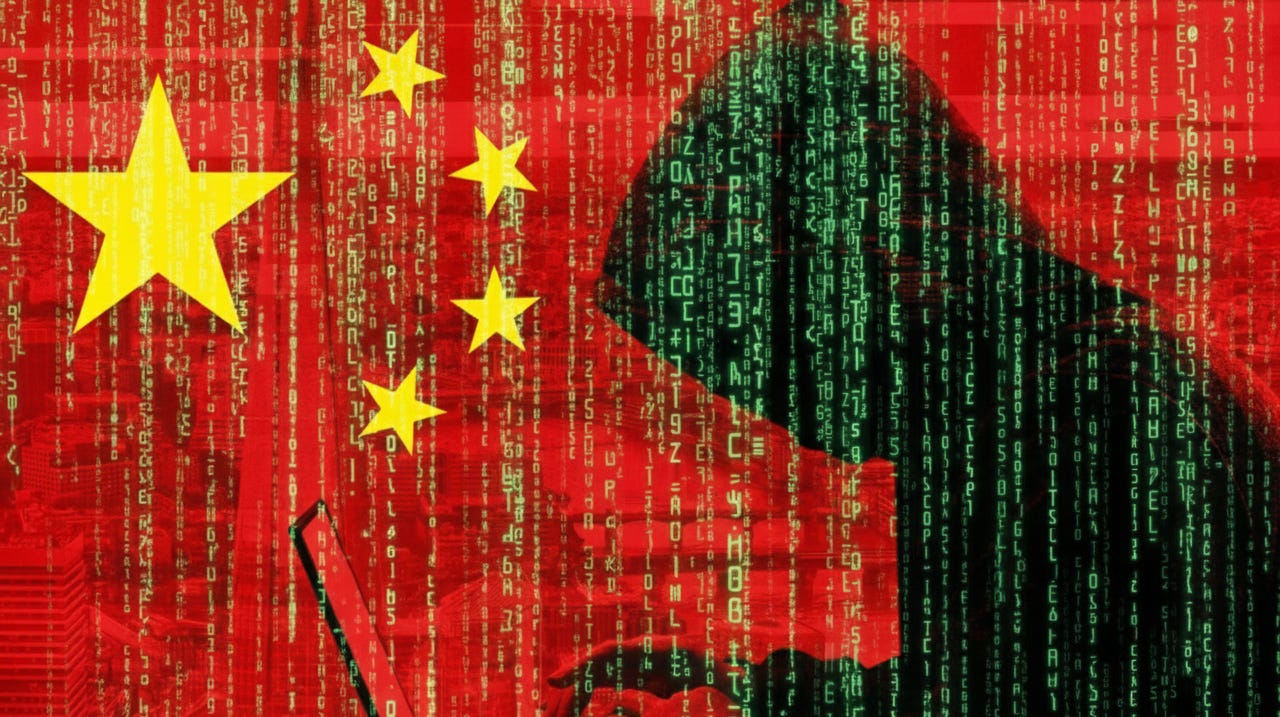
China threats regarding trade deal
After the UK government repeatedly delayed the final planning decision for the embassy, a decision facing heavy opposition from MI5 and lawmakers, the Chinese Foreign Ministry issued a public threat of “consequences” for the UK. A spokesperson for Beijing accused the UK of showing “disregard for contractual spirit, acting in bad faith and without integrity” over the embassy site, warning that the UK side would “bear all consequences” if it did not immediately honour its supposed commitments.
You may recall that the UK government faced stinging criticism for a point blank refusal to give details on Rachel Reeves’s China trip, for the perceived lack of substance and the political optics of the deals secured during the Economic and Financial Dialogue. While the Chancellor announced agreements worth an estimated £600 million over five years, primarily focused on market access for financial services, agri-food, and regulatory cooperation, critics, including China hawks and political opponents, immediately dismissed this figure as “puny” or “delusional” relative to the risks. The government’s core message is that the visit was crucial for establishing a “stable and balanced relationship” that allows the UK to promote growth while also candidly raising concerns about national security, human rights (like the Jimmy Lai case), and support for Russia, framing the engagement as a pragmatic necessity because China is the world’s second-largest economy.
But in reality we don’t know what was agreed and how much the UK government is in the pocket of China.
TikTok child data harvested and accessible by Chinese government
The primary risk associated with TikTok stems from its extensive collection of user data, kids data. This includes sensitive personal information, device details, keystroke patterns, and even potentially biometric data like voice and face recognition. Concerns are heightened because its parent company, ByteDance, is based in China, leading to international skepticism about whether the data could be made accessible to the Chinese government. Furthermore, regulatory bodies have found that TikTok has illegally collected and processed data from children under the age of 13, often failing to secure verifiable parental consent or remove underage users despite being aware of their presence. This accumulated data is used for tracking, profiling, and targeted advertising, which raises significant privacy and cybersecurity red flags for all users, especially minors.
For children, the risks extend beyond privacy to their mental health and exposure to harmful content. TikTok’s highly sophisticated and addictive algorithmic system, which is trained on young people’s data, has been accused of rapidly steering vulnerable users toward content that can reinforce negative ethnic stereotypes, misogynistic views, self harm, and eating disorders. This algorithmic amplification of potentially harmful content poses a direct threat to the physical and emotional well-being of young Europeans and others globally. Margrethe Vestager, Executive Vice-President for a Europe Fit for the Digital Age, underscored this by stating: “TikTok needs to take a close look at the services they offer and carefully consider the risks that they pose to their users - young as well as old.” The UK Information Commissioner’s Office (ICO) fined the company for misusing children’s data, with the regulator noting that: “TikTok should have known better. TikTok should have done better.”
Chagos Islands deal risk
The strategic importance of the Chagos Archipelago, which hosts the vital joint UK-US military base on Diego Garcia, presents a complex future threat. The UK is proceeding with a deal to hand sovereignty over the islands to Mauritius. While the deal protects the operation of the military base for at least 99 years, the change in sovereignty has opened a geopolitical door.
Some UK and US officials have voiced concern that, in the event of the long term lease not being extended or secured, a Mauritian controlled territory could be leveraged by China. China has shown increasing interest in establishing footholds in the Indian Ocean, and critics fear that an eventual Chinese military or surveillance presence in the archipelago could severely compromise the strategic value of the Diego Garcia base and threaten Western military dominance in the region.
China is not our friend, wake up Starmer and smell the espionage.