


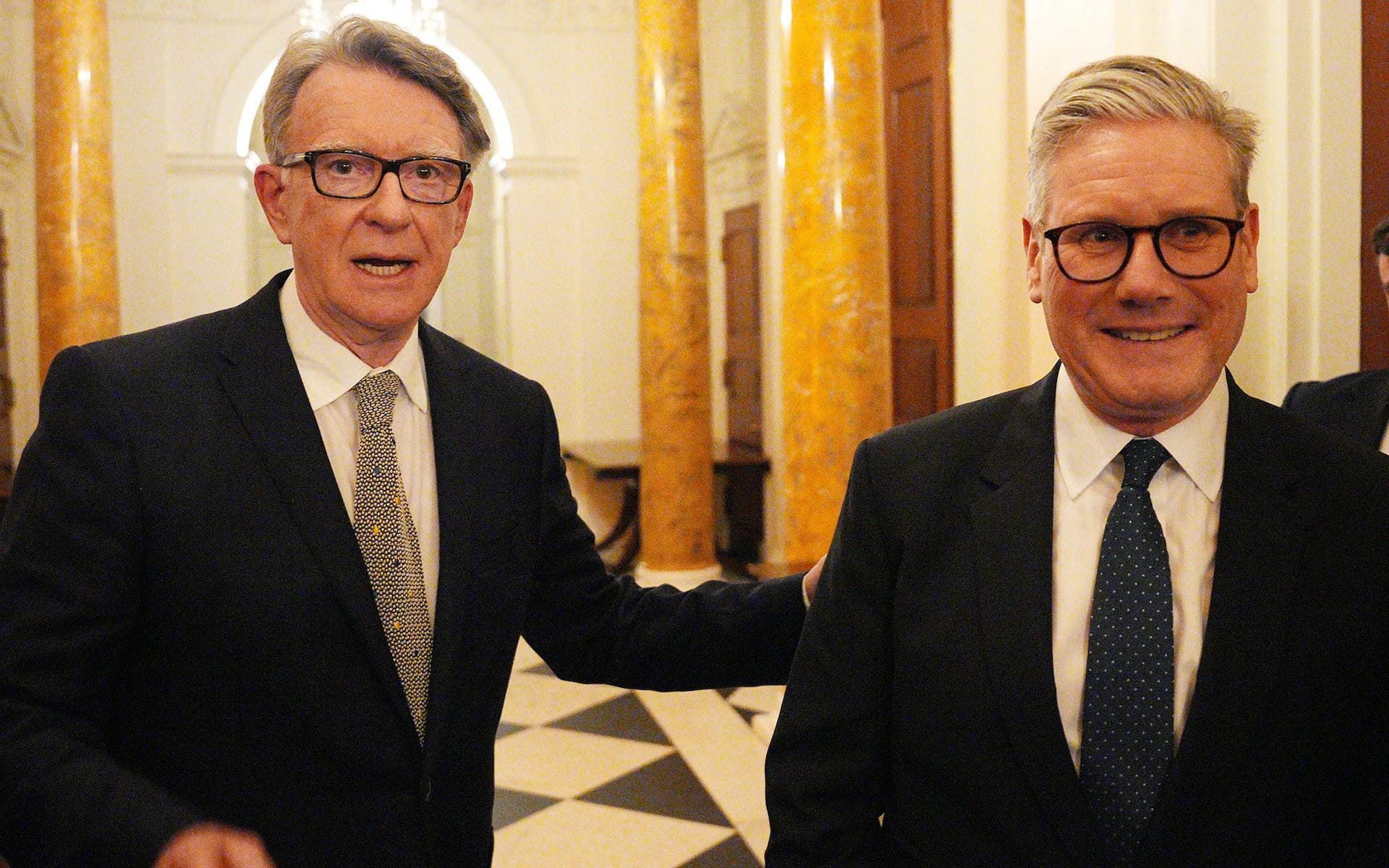
Starmer has spent months assuring Parliament, the press and the public that every rule was followed in the appointment of Peter Mandelson as Britain’s ambassador to the United States. Even after the resignation of his own chief of staff, Morgan McSweeney over the scandal, he insisted due process had been observed and portrayed himself as another victim of Mandelson’s dishonesty. Fresh revelations now show that claim was untrue and Mandelson failed enhanced security vetting. Foreign Office civil servants simply overruled the decision and pushed the appointment through anyway because, as I see it, it was more political and ideologically aligned to appoint him that face the clear evidence put before them.
The Vetting Failure Foreign Office Officials Overruled
The vetting process requires full disclosure of personal finances, business links and even sexual history, along with input from intelligence services and what they know on an indiviual. Mandelson’s file raised major red flags, including long standing concerns from British and allied agencies about his vulnerability to hostile foreign states and blackmail risks. He has also been in trouble many times before in government, hence his nickname, the Prince of Darkness. Despite this, senior Foreign Office officials invoked a rarely used override procedure to grant him clearance so he could take up the post. I cannot believe that Starmer and his cronies were not aware, involved or put pressure on regarding this.
Vetting failures at this level are described by insiders as exceptionally rare for a role as sensitive as ambassador to Washington. The decision was taken after Starmer had already named Mandelson publicly, creating a dilemma the civil servants resolved by bypassing security advice.
Morgan McSweeney’s Resignation Starmer Chose To Ignore
Starmer’s then chief of staff, Morgan McSweeney, had played a central role in recommending Mandelson. When the appointment unravelled amid Epstein file revelations late last year, McSweeney resigned on in February saying he took full responsibility, admitting the decision was wrong and calling for the vetting system to be fundamentally overhauled. Starmer’s response was to carry on as if nothing had changed. He continued to tell Parliament that full due process had been followed and that the same rigorous checks applied to every ambassadorial appointment.
McSweeney’s departure should have triggered an immediate review. Instead Starmer doubled down, even refusing six times in PMQs to answer straightforward questions about his conversations with Mandelson before the appointment.
Starmer’s Assurances To Parliament Now Lie In Ruins
On multiple occasions last year Starmer told the House of Commons and wrote to the Intelligence and Security Committee that due process had been completed and Mandelson had cleared all necessary checks. A government spokesman repeated the line as recently as September last year. Downing Street now claims Starmer only learned of the vetting failure and the Foreign Office override earlier this week, really? The Prime Minister, they say, was furious and has already ordered the Foreign Office to explain itself and suspended its power to overrule vetting recommendations.
So again, either Starmer knew about the override and misled Parliament, or he did not know and allowed a critical diplomatic appointment to proceed without proper oversight. In either case the assurances he gave were false.
More documents related to the decision that were due to be released are now at the centre of a fresh row, with officials debating whether to withhold them from the Intelligence and Security Committee despite a parliamentary vote demanding their release.
Foreign Office Civil Servants Acted Above Accountability
The override was carried out by unelected officials inside the Foreign Office. Sir Olly Robbins, the department’s top civil servant, is now reported to be leaving his post after Starmer and Foreign Secretary Yvette Cooper lost confidence in him. Civil servants made a political decision not on national security grounds and overruled professional vetting advice.
This is not isolated incompetence. It is another example of a civil service being ideologically and politically biased.
Conclusion
Britain cannot afford another scandal that exposes the rot at the heart of public appointments and national security vetting. Restore Britain has consistently demanded publicly accountable government and an end to the unaccountable power of the permanent bureaucracy. Its policies call for civil servants to be held personally responsible for failures, the abolition of final-salary pensions that insulate officials from consequences, and a foreign policy that puts British interests first rather than the convenience of political insiders.
Rupert has repeatedly stated that the failing civil service must be personally held to account. This Mandelson affair proves why. Only by implementing those reforms, scrapping the culture of political overrides and restoring real ministerial oversight can Britain prevent the next vetting disaster. Starmer’s Labour has shown it is incapable of delivering that change. Restore Britain stands ready to do so.