


In an era where organisations claim to combat division and promote unity, Hope Not Hate (HNH) stands as a stark contradiction. Founded with the mission of opposing racism and extremism, which is right and noble, HNH has instead been embroiled in controversies that undermine its credibility and purpose. Allegations of associations with convicted criminals, inflammatory rhetoric, and questionable financial practices paint a picture of an entity that fosters the very discord it claims to fight.
Who they are
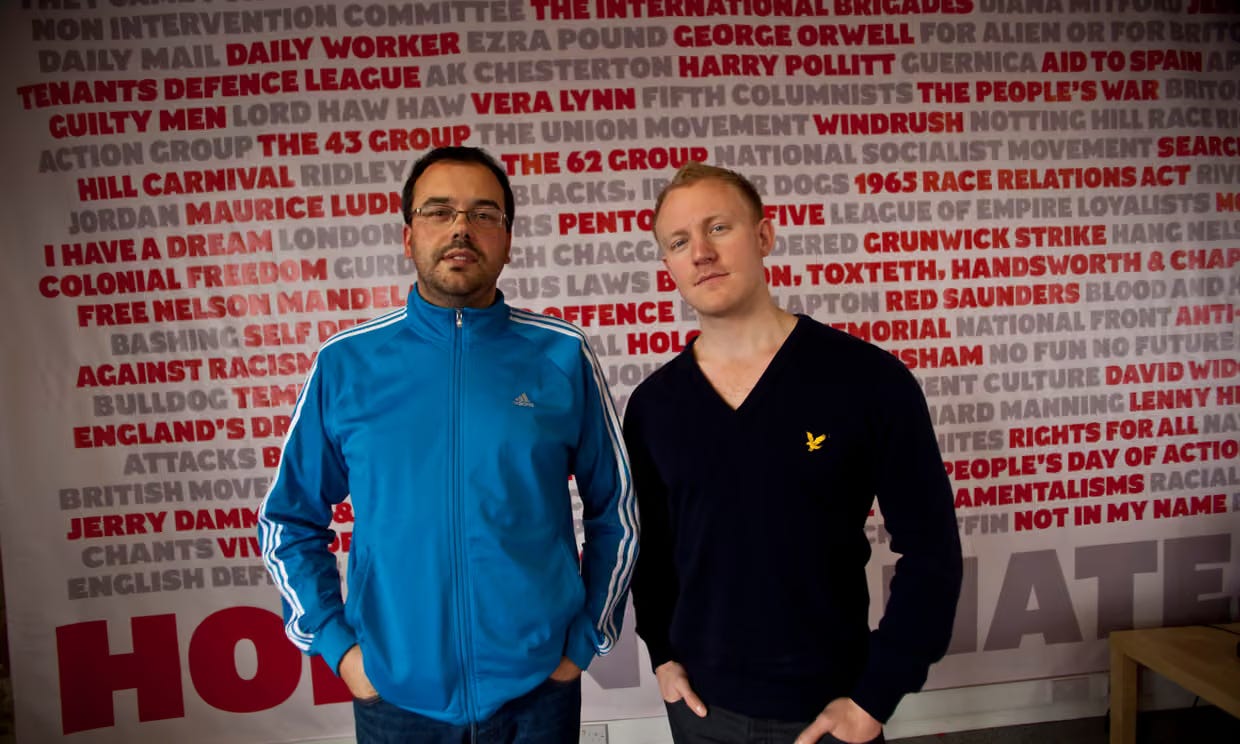
Hope Not Hate is a UK based advocacy group established in 2004 by Nick Lowles, a former editor of the anti-fascist magazine Searchlight, from which it split in 2011. The organisation positions itself as a non-partisan campaigner against racism, neo-fascism, Islamic extremism, and antisemitism, operating through research, lobbying, media engagement, and community initiatives. It comprises two entities: Hope Not Hate Educational Ltd (the charitable arm) and Hope Not Hate Ltd (focused on campaigning and investigations). HNH has launched campaigns like #MoreInCommon following the 2016 murder of MP Jo Cox, and it has been involved in investigating right wing groups such as the English Defence League (EDL) and influencing policies on hate crimes. Despite these efforts, HNH’s tactics often veer into smear campaigns against political opponents, blurring the line between anti-extremism and partisan activism. The group’s influence extends to advising on policy and collaborating with authorities, but this has raised concerns about overreach and bias.
Their leaders and members
HNH’s leadership includes Nick Lowles as chief executive, who has a background in investigative journalism and was awarded an MBE in 2016 for tackling extremism. Other key figures include Jemma Levene (deputy director) and Ruth Smeeth (former deputy director and board member). Matthew Collins, head of intelligence, is a former far right activist turned anti-fascist. However, several associations and actions highlight troubling and sinister behaviour under the surface.
One significant allegation involves Liron Velleman, a Labour councillor and political organiser for HNH, who pleaded guilty in 2023 to grooming what he believed was a 13-year-old girl who was actually a police decoy. He sent explicit messages and videos, asking to see her in her school uniform and underwear. Velleman had advised on the UK’s Online Safety Act, which focuses on protecting children online, at a parliamentary hearing. This conviction raises serious questions about HNH’s vetting processes and hypocrisy in child protection advocacy.
Further claim include that of an HNH member attacking Asian women with a hammer and instances of inflammatory rhetoric persist. In a 2013 speech, Matthew Collins stood behind a Soviet flag and declared, “Comrades, brothers and sisters, HopeNotHate.co.uk, you are our Red Army!” The Red Army is infamous for mass rapes, murders, and atrocities during its advance through Poland and Germany in World War II, with estimates of up to 2 million victims. Critics, including Polish MP Janusz Kowalski, condemned this as “Left-wing extremist.”
Other controversies include Lowles spreading unverified claims during 2024 riots, such as acid attacks on Muslim women, which police confirmed were false, potentially inciting unrest. HNH has also been accused of doxxing and creating hit lists of political opponents, including Jewish comedian Josh Howie alongside far-right figures, prompting terrorism concerns. In 2025, an HNH employee was revealed as a convicted pedophile, leading to calls for shutdown. These acts suggest a pattern of ethical lapses that contradict HNH’s anti-hate ethos.
Access to Government
Despite these incidents, over the last five years (2021-2026), HNH has maintained significant access to UK government entities. It has advised on extremism policies, collaborated with the Home Office on hate crime initiatives, and received funding for voter registration in 2020 (£75,000). Lowles has engaged with MPs and Lords, influencing debates on online safety and counter-extremism. In 2023, HNH exposed Conservative councillor Tim Wills’ far-right links, leading to his suspension. It also revealed inflammatory posts by Conservative mayoral candidate Susan Hall. It is further understood that they have access to government departments even the Attorney General whilst engaged in policy advising, therefore its influence on Labour affiliated figures raises impartiality concerns. Critics argue this access allows partisan interference, as seen in campaigns against UKIP and the Brexit Party.
Charlotte Gill exposes funding streams
HNH’s funding includes donations from charitable trusts, trade unions, and individuals. It has received National Lottery grants, such as through the Community Fund for anti-hate projects. Journalist Charlotte Gill (@CharlotteCGill on X) has highlighted how Lottery funding flows to HNH via intermediary companies, criticising it as supporting a “so-called charity” with “unpleasant” activities. In 2022-2023, the charitable arm (now Hope Unlimited) loaned £1.1 million to the Ltd company, prompting a Charity Commission inquiry. The Commission found blurred lines between entities but noted improvements, like appointing separate staff. Gill’s investigations reveal over £1 million in Lottery funds to HNH-linked projects, raising questions about misuse for political campaigns. Government grants, like £66,000 from the Department for Communities in 2012-2013, were restricted to educational work.
Why it should be shut down
Hope Not Hate exemplifies a dichotomy: an anti-hate group entangled in hate inciting acts. Associations with convicted pedophiles, glorification of historical atrocities, and disinformation undermine public trust. Its hit lists endanger individuals, akin to domestic terrorism in our mind. Questionable funding practices, including Lottery money potentially funnelled for partisan ends, violate charitable neutrality. Governmental access amplifies bias, stifling democratic discourse. Shutting down HNH would protect free speech, ensure impartial anti-extremism efforts, and redirect resources to genuine unity-building initiatives.
The UK deserves better than a group that sows division under the guise of hope.