

Iran’s theocratic regime stands as a persistent threat to global stability, sponsoring proxy militias like the Houthis and Hamas while committing egregious human rights abuses at home. In recent weeks, reports indicate that Iranian forces have machine-gunned to death an estimated 30,000 protesters amid widespread unrest, alongside routine executions of gay individuals and the rape and killing of women who defy, even accidentally, strict Islamic codes. This brutality underscores Tehran’s disregard for international norms, even as it escalates regional terror through ballistic missile programs and nuclear ambitions.
The current crisis escalated following U.S. and Israeli pre-emptive strikes on Iranian military targets this weekend, aimed at curbing Tehran’s nuclear advancements that we are told were representing an ‘imminent threat’ and their continued support for terrorist networks in the region.
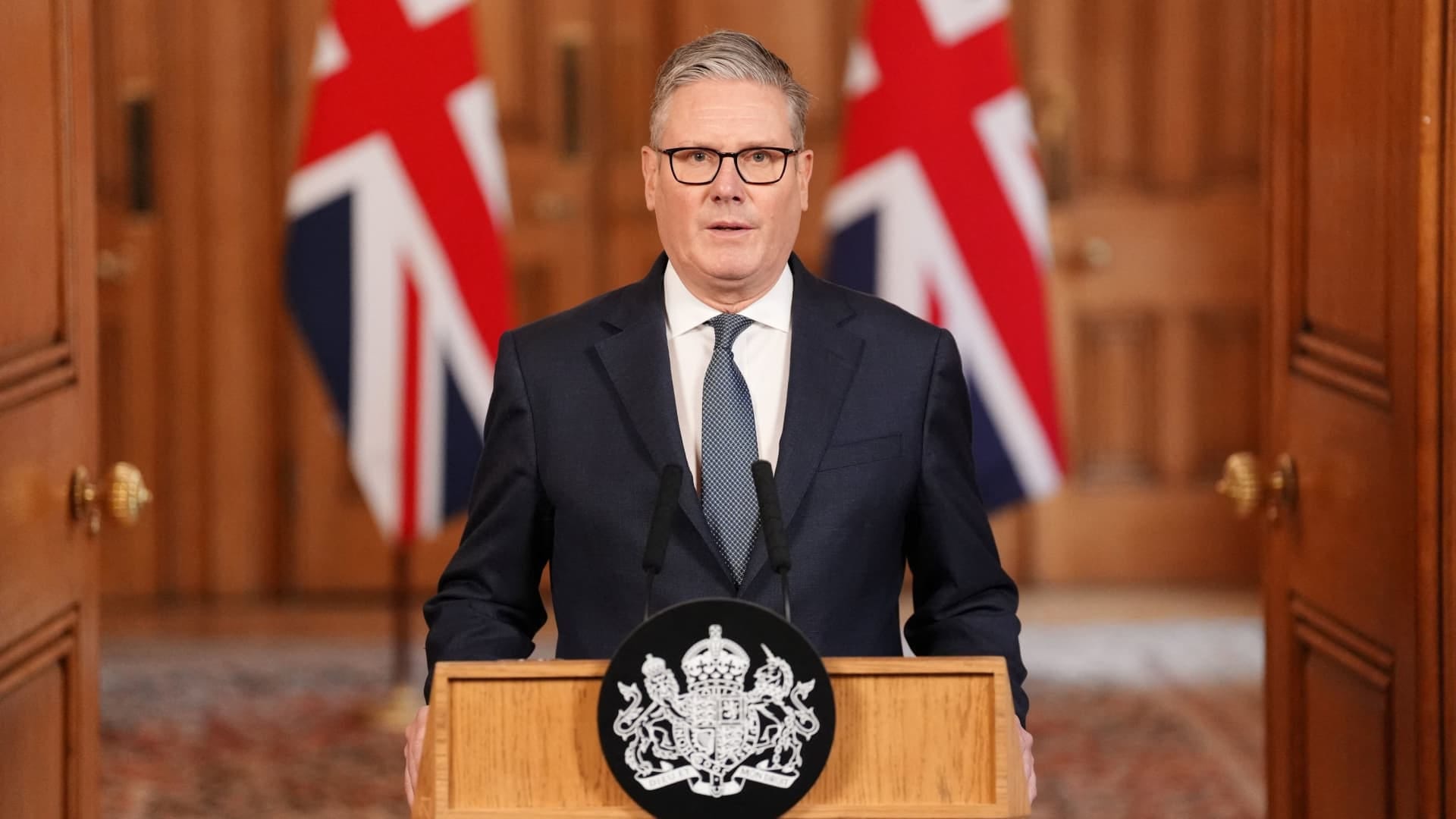
Britain’s historical alliance with the United States has long involved shared military facilities, including RAF bases and the joint US/UK base on Diego Garcia in the Chagos Islands that is such a mess lately. Thats now gone. Starmer explicitly distanced himself from the strikes, emphasising non-involvement and a reliance on diplomatic channels amid fears of further escalation.
This backdrop highlights a pivotal moment for UK foreign policy, where decisions on alliances, security, and moral stances intersect with domestic pressures. Yet, Starmer’s handling reveals a pattern of hesitation that undermines Britain’s respect and standing in the world.
Starmer’s weak leadership on full display
Keir Starmer’s response to the U.S.led strikes exemplifies an utter lack of leadership, prioritising evasion over resolve and morals. In his public statement, Starmer immediately emphasised that ‘the United Kingdom played no role in these strikes’ effectively backing away from supporting longstanding American allies without offering any substantive backing or strategic rationale. This knee jerk child like disavowal not only signals weakness to adversaries but also fails to reassure the British public, leaving citizens without clear guidance on potential threats to UK interests or nationals in the region. Critics, including senior military figures, have lambasted this as making Britain appear unreliable and weak.
A core issue is Starmer’s refusal to permit U.S. forces to use British bases, including those in the Chagos Islands, for operations against Iran. This decision is believed to have prompted President Trump to withdraw support for the UK’s deal to transfer sovereignty of the Chagos Islands to Mauritius while retaining a 99-year lease on Diego Garcia. The U.S. had considered Diego Garcia for strikes, but Starmer’s block citing concerns over international law led to what we believe is a severe diplomatic rift, with Trump accusing Britain of weakness, something difficult to argue with. This hesitation no doubt stems from legal advice deeming potential strikes unlawful from Hermer, yet it contrasts sharply with Iran’s flagrant violations and has no respect for international law, sponsoring terror across the region via proxies like the Houthis and Hamas, executing dissidents en masse, and ignoring human rights norms.
Two tier selection of international law
Starmer’s invocation of international law rings hollow when juxtaposed with his government’s inconsistencies. Defence Secretary John Healey claimed the Chagos handover was mandated by international law, an assertion alreay proven false as no such legal obligation exists. This selective adherence exemplifies another two-tier approach under Starmer where he is strict on allies, lenient and weak on threats.
Under established international law, pre-emptive action is permissible if a credible threat to national security exists, precisely the scenario with Iran’s missile capabilities and proxy warfare. Yet, Starmer opts for restraint, even as EU Commission President Ursula von der Leyen delays substantive talks until Monday, dismissing the urgency with what amounts to a weekend reprieve for a failing EU bureaucracy.
Starmer is weak due to home political worries
Domestically, Starmer’s timidity appears driven by re-election fears rather than principle. The government has resisted proscribing the Islamic Revolutionary Guard Corps (IRGC) and the Muslim Brotherhood as terrorist organisations, despite repeated calls to do so and a known risk to British people.
This reluctance is linked to concerns over IRGC operatives in the UK, confirmed multiple times by MI6, and potential backlash from Iran linked activists let into the country no doubt as part of his multicultural harmony ideology. The recent sectarian victory for the Greens in the Gorton & Denton by-election underscores Starmer’s worry about alienating key voter bases, prioritising re-election prospects over national security. MI5 Director General Ken McCallum has highlighted that 75% of counter-terrorism efforts target Islamic fundamentalists, a statistic that demands decisive action against groups like the IRGC and Muslim Brotherhood operating on British soil.
Even former Bank of England Governor Mark Carney, openly no fan of Trump, publicly supported the U.S. president’s approach, highlighting the irony of Starmer’s isolation. Sir Richard Dearlove, former MI6 chief, in a GB News interview today, lambasted the government for not taking a moral stand, labelling Starmer weak on military base access and expressing alarm over IRGC presence in London. He warned that security services must intensify efforts to thwart any retaliatory attempts, criticising the administration’s lack of preparation. In sum, Starmer’s approach is marked by evasion, inconsistent legalism, and domestic pandering which erodes Britain’s alliances and emboldens threats.
True leadership demands clarity and moral courage, not this feeble retreat.