


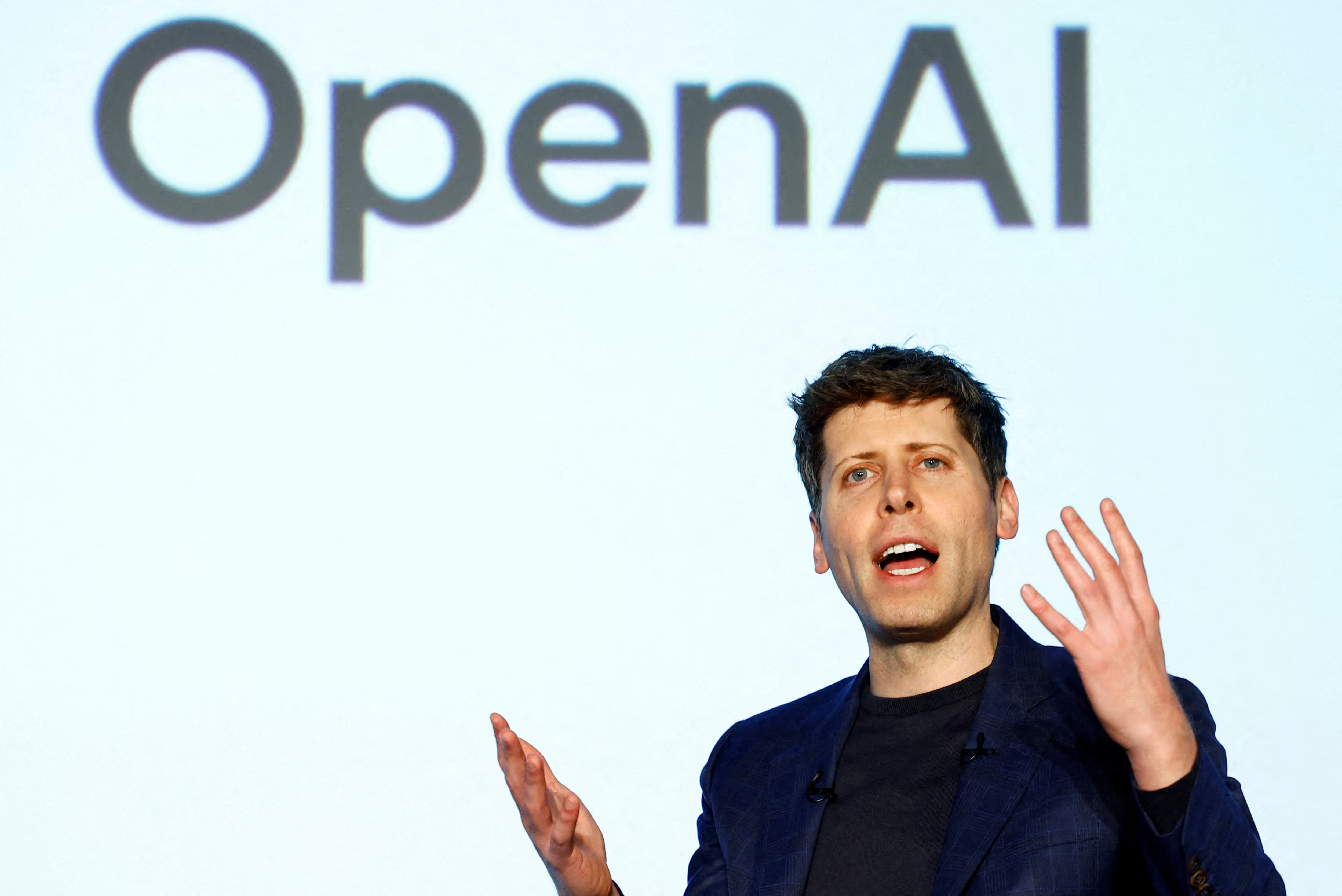
OpenAI has paused its Stargate UK data centre project, part of a £31bn package of American tech investment announced last September, that is all now slowly slipping away. The company cited high energy costs and an unfavourable regulatory environment as the main reasons it will not proceed for now, and I cant see that ever changing under this anti business net zero obsessed government.
This decision delivers a reality check to Starmers government’s repeated nonsense claims that Britain can become an AI superpower. I have warned in previous articles that the UK’s ambitions in artificial intelligence is a just a Starmer wet dream. This is yet another episode that has done serious damage to Britains reputation across the globe.
Without reliable, affordable energy, a planning system that actually works, a business focussed legislative framework, low taxation, low cost of employment and a tech minister who knows the sector; Starmers talk of Britain being a global leader in AI is an utter joke.

The Stargate UK Project and Its Collapse
The Stargate UK scheme was meant to deliver a large data centre in the north east, backed by OpenAI, Nvidia and Nscale. It formed the centrepiece of a wider £31 billion commitment from US firms to boost British AI infrastructure. The project was hailed by ministers as proof that the UK was open for tech business but OpenAI has now made clear it will only move forward when the right conditions exist for long term investment, specifically citing regulation and the cost of energy.
Progress on the ground had already stalled, and the company has simply walked away rather than pour money into a hostile environment, ironically you could call it a £31bn black hole.
The Direct Result of Net Zero Obsession
Britain’s industrial energy prices are among the highest in the developed world. Successive governments, and especially the current one, have prioritised net zero targets over affordable power. Coal and gas plants have been closed, restricted or demolished to great fanfare, while intermittent renewables that require expensive backups and grid upgrades that never arrive on time.
OpenAI’s decision is not some isolated complaint. Data centres consume vast amounts of electricity, and the economics simply do not stack up. One in five UK firms have already begun offshoring AI workloads for the same reason. The government’s own strategy relies on AI to drive growth, yet its energy policy makes that growth impossible. This is not some form of bad luck. It’s the predictable outcome that everyone with a sensible head knew that putting climate virtue-signalling ahead of industrial reality.
Planning Red Tape, Legislation and Punitive Taxation
Energy is the main part of the story but not all of it. Planning delays, copyright rules, increased employer NI, employee taxation and a thicket of other regulations have made the UK an unattractive place for capital intensive projects. Why would high achievers want to comes to the UK in this type of environment?
OpenAI and other tech giants have pointed to these barriers repeatedly. Corporation tax, business rates and employment rules add further friction that competitors in the United States, the Gulf or even parts of Europe simply do not face.The result is straightforward. Global investors look at Britain and see high costs, slow approvals and political risk. They simply take their money and their jobs elsewhere.
The Government’s AI Ambition Was Always In The Clouds
Keir Starmer and his ministers have talked endlessly about making the UK an AI leader. Photo opportunities with Sam Altman and grand announcements last autumn were meant to signal seriousness. Yet the fundamentals were never fixed. Energy policy remained locked into net zero dogma. Planning reform was promised but delivered in name only. Taxation stayed punitive for wealth creators. You cannot lead the world in artificial intelligence when your grid cannot cope, your bureaucracy strangles projects, and your taxes deter the very firms you claim to court. Shadow ministers from the opposition have rightly called out the direction of travel. The alarm bells are not just ringing in Downing Street. They are deafening across the country.
UK Trails the United States in the AI Investment Race
While OpenAI has walked away from its UK project, the United States is witnessing an unprecedented surge in private capital for artificial intelligence infrastructure. American hyperscalers, including Amazon, Microsoft, Google and Meta, poured more than £200bn into capital expenditure in 2024 alone, a 62 per cent increase on the previous year, with even larger sums forecast for 2025/26. Tech giants have publicly pledged to shoulder the full cost of new energy infrastructure to support data centres, signalling confidence in long term returns. The contrast with Britain could not be starker.
Here in the UK, wholesale electricity prices have hit $115 per megawatt hour, more than double the American average of $48 dollars. With energy being a huge factor in an AI datacentre, who the hell would invest in any energy intensive services in the UK at the moment.
Data centres in the United States already account for around 4 per cent of national electricity consumption and are projected to drive nearly half of all demand growth to 2030, yet the market has responded with speed and scale rather than retreat. In Britain, the same demand is strangled by net zero constraints, grid bottlenecks and planning delays that deter the very investment ministers claim to court. This divergence is no accident.
Consider this;
The United States benefits from abundant, flexible energy sources, including natural gas and a growing nuclear, while the UK has shuttered reliable capacity in pursuit of intermittent renewables.
American regulators have streamlined approvals and encouraged private sector innovation, whereas British bureaucracy adds years of uncertainty and cost.
US firms face lower overall taxation and fewer employment burdens, allowing capital to flow freely into AI projects that create thousands of high skilled jobs.
I have argued before that the Labour government’s vision of Britain as an AI superpower was built on deluded fantasy. The OpenAI decision, set against America’s boom, proves the point beyond any doubt. Global investors are not fooled by press releases or photo opportunities. They follow the fundamentals; cheap, reliable power and a business environment that rewards risk rather than punishes it. Until those fundamentals change, Britain will remain a spectator while the United States powers ahead in the industries that will define the next decade.
Restore Britain would be a much better option than anti Britain Labour
This episode is not a one-off setback for the future of this country. It is a warning that current policies are driving investment away from Britain at the exact moment we need it most. Billionaires and millionaires who invest in these types of business rusk are leaving our country in 10,000’s and taking their money and entrepreneurship talents with them.
Restore Britain offers the only coherent alternative. Its policies would repeal net zero targets and the Climate Change Act, allowing cheap, reliable energy from nuclear, gas and whatever sources make economic sense. We would slash corporation tax to the lowest in Europe, scrap IR35 and inheritance tax burdens, and deregulate planning to get projects like this going quickly. These steps would restore the conditions that OpenAI and others say are missing today.
Rupert has consistently highlighted how ditching irrational net zero commitments would cut bills, free up resources and make Britain competitive again. His approach puts energy security, growth and British interests first, exactly what is required to turn around stories like this one. Until the country adopts that common sense platform, we will keep watching flagship projects disappear and wondering why the world no longer sees us as a serious place to invest. The choice is clear. Restore Britain’s policies would resolve this mess and put Britain back on the map for the industries of the future.