


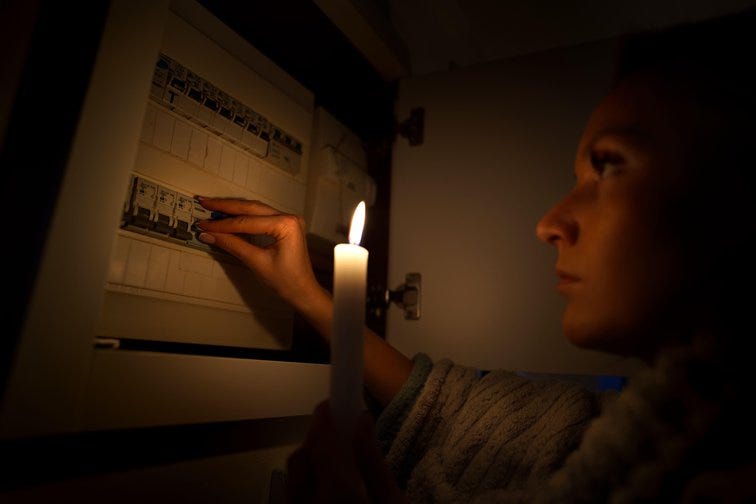
Decades of policy focused on renewables and an obsessive push for net zero by 2030 have left our electricity grid dangerously fragile, leading to a high probability of rationing and rolling blackouts within years. This is not alarmism, it is a clash between reality and physics, to left wing ideology and total ignorance.
The recent Watt-Logic report details the risks backed by data and concludes the following:
Traditional power station capacity reducing
Around 12 gigawatts of ageing gas-fired power stations, over a third of the existing fleet, face closure within five to seven years because of their age and lack of upgrades and net zero ideology of not replaying them. National Grid ESO assumes they will run at only 5 percent utilisation, this is unrealistic and the plants were designed for far higher loads.Renewables don’t produce when we need them most
On cold, still winter evenings, when demand peaks, wind and solar produce little or nothing. North Sea gas production is declining, exploration licenses refused and we risk shortages exactly when we need firm power most.Electricity rationing is virtually inevitable
Probability of regional electricity rationing or blackouts by 2030 sits between 65 and 85 percent, with a 5 to 10 percent baseline risk of a full grid collapse. A near miss occurred in January 2025, costing 23 million pounds to balance the market.The Iberian blackout is a lesson we are not learning
In April 2025 Iberia experienced a blackout and was triggered by renewable assets failing grid code compliance under weak conditions. Solar inverters and other inverter based resources disconnected, causing frequency instability and a peninsula wide outage. The same vulnerability exists here as renewables replace conventional generation and reduce system inertia.No one has accountability
No single institution holds accountability for security of supply. Governance failures compound the problem, while political leaders ignore warnings and press ahead with Clean Power 2030 targets.
These are not theoretical risks. Events in 2025, including the Heathrow substation blackout in March, have already shown ageing infrastructure and poor maintenance under strain.
Renewables are so much more expensive
Multiple governments are guilty of false reporting on the true affordability of net zero ideology but Ed Miliband takes this insanity to another level. He insists renewables are cheap because the fuel, wind or sunshine, is free and our bills will go down but thats just not true. Yes the sun is free, as is the wind but the rest is pure fantasy. This is all ideology dressed up as economics and ignores the full system costs that households actually pay through their bills and insane taxes.
Wind is hugely more expensive than gas
Offshore wind subsidies under recent Contracts for Difference stand at 83 pounds per megawatt hour in today’s money. The average day-ahead wholesale price based on gas sits around 70 to 73 pounds per megawatt hour. Even on subsidy alone, wind is already 13 percent more expensive than firm gas power, and that subsidy figure does not include any of the extras.Wind and solar figures are also false
Onshore wind and solar appear around 70 pounds per megawatt hour on paper, yet this headline levelised cost excludes everything that makes them expensive in practice.Billions in subsidies on our bills
Since 2006 consumers have paid an extra £220bn, in today’s money, because of net zero policies and renewables subsidies recovered through bills rather than general taxation. Had Britain stayed with its legacy gas-based system, even allowing for the gas price spike, households would be hundreds of pounds a year better off and the country would have avoided this cumulative hit.Wasted billions on backup when renewables fail to produce
Intermittency forces massive backup. Wind delivers only about 35 percent capacity factor and solar around 10 percent. We therefore pay for gas plants through the Capacity Market to sit ready when the weather fails, adding billions annually.Huge new infrastructure costs billions in grid connections
Grid reinforcement and connections cost billions more. Renewables are often built far from demand, especially in Scotland. One 800 megawatt gas station needs a single grid connection. The equivalent output from wind requires dozens of turbines and multiple new lines. National Grid prioritises renewable connections over maintaining legacy assets, many of which date from the 1970s and are now failing.We pay to turn renewables off, then pay again to turn gas power on
The Sea Green offshore wind farm off Scotland had two thirds of its output curtailed in 2024 because the grid could not carry the power south. Consumers paid the wind farm compensation at full subsidy rates and then paid gas stations downstream to generate the electricity that was needed anyway.Real-time balancing adds further billions
Every gust of wind or passing cloud requires immediate adjustment to keep frequency stable. These costs, plus carbon taxes, the Renewables Obligation, climate change levies and other hidden charges, all land on bills without scrutiny.
The Climate Change Committee itself admits no net savings from the policy until 2038 to 2042 at the very earliest, by that time our economy will be dead, families will experience tough day to day living and thousands will die from cold. This reality is completely at odds with Labours multiple promises at elections to save consumers £100s on their bills so they don’t have to make the choice between ‘heating and eating’. They are either ignorant or liars.
Even those projected savings rest on wildly optimistic assumptions that wind costs will fall dramatically, assumptions contradicted by every recent auction round. The government has refused to publish a proper full-system-cost comparison between renewables and alternatives, cancelling one such exercise under Miliband. The result is a deliberate deception that keeps the public paying for an unreliable system while being told it is cheap.
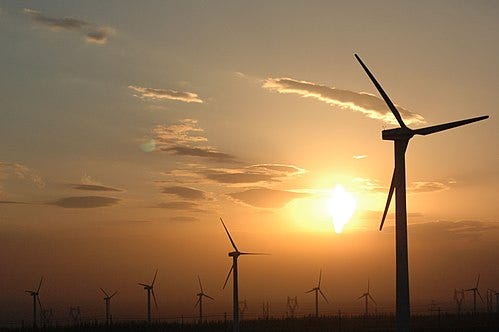
Net zero is an ideology not a reality
Renewables plus net zero does not deliver cheaper, greener, and more secure energy. The evidence shows the opposite. The policy is ideological zealotry, not science. Successive governments, especially the current Labour administration, have edited independent advice, refused to engage experts, and assumed unrealistic build rates for replacements. They offshore manufacturing, raise global emissions, and burden British households while virtue signalling how great they are and care for the planet.
It’s sheer complacency. Near misses and real blackouts elsewhere are dismissed as one-offs, yet the grid is losing rotating mass for stability and faces higher demand from electrification and data centres. Remember Starmer pushing for the UK to be an AI powerhouse? We don’t have the energy capacity or reliability needed and we never will on the current trajectory.
A four-hour rolling blackout by region is what rationing would look like initially. Lives would be lost, ventilators would fail, and the economy would take a hit far beyond airport delays. Yet ministers prioritise targets and stupid blinkered ideology over physics.
Trumpeted AI data centers require huge energy resources
Rachel Reeves has also just announced a major £2.5 billion funding package aimed at accelerating artificial intelligence (AI) and quantum technology adoption in the UK, with a significant focus on data center infrastructure. But this is another issue that is not being addressed, their hunger of energy is immense and we just don’t have that level of surplus or consistent energy.
Drop windmills, keep gas and coal whilst we build nuclear to replace them
There seems to be a complete lack of urgency on nuclear and gas extensions and more urgency on windmills and buying Chinese solar panels to go on farmland with kill switches made from slave labour and dodgy mining practices. We need modular nuclear at sites around the country, thats the long and short of it and we need to build them quick.
They cost roughly £1.75bn each and can be built in 5 years, if the government takes the necessary steps. If they can remove our right to jury trials they can do this, if they want to. We need to keep coal and gas powered stations on a temporary basis to keep the lights on and our economy functioning. But this net zero obsessed government instead chases intermittent capacity that requires parallel backup systems.
Think about this. Some years ago the Conservative government spend £175bn subsiding energy bills under the Energy Price Guarantee in 2022. If that money would have been used for nuclear investment as many called for, we could be close to having 10 modular nuclear reactors coming online in the next couple of years. Now add in the extra £220bn we have had to pay extra on our bills so far and will continue to do so for another 15 years and the financial incompetence is immeasurable.
This is not a managed transition, it is self sabotage on the altar of net zero.