

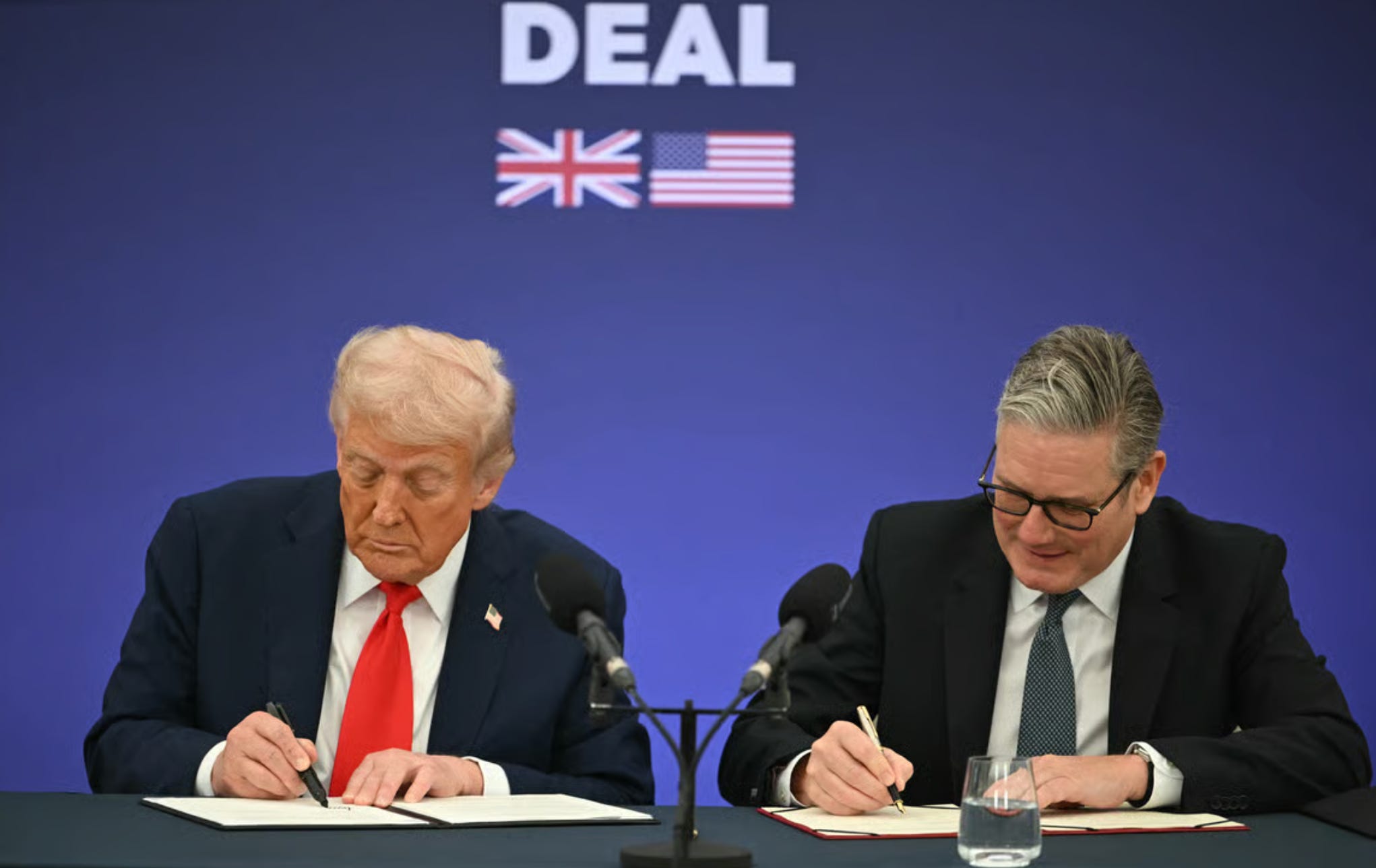
In September 2025, the United States and the United Kingdom signed the Technology Prosperity Deal, a non-binding agreement valued at $40bn / £31bn aimed at boosting collaboration in emerging technologies such as artificial intelligence, quantum computing and civil nuclear energy. The pact was intended to foster commercial partnerships, reduce regulatory barriers, and position the two allies to lead in technological innovation amid competition from countries like China. It built on a broader Economic Prosperity Deal from May 2025, which outlined commitments to lower trade barriers across various sectors.
However, around December 16, 2025, the US administration had enough of the UK’s continual attack on free speech, censorship and state monitoring so paused the implementation of the tech deal, effectively suspending negotiations and putting the entire agreement on ice. This move came in addition to the escalating frustrations in Washington over the UK’s failure to make sufficient concessions in ongoing trade talks. The suspension has been described as a significant blow to UK Prime Minister Keir Starmer’s government, highlighting strains in the “special relationship” between the two nations.
Reasons for the Suspension
The US cited multiple interconnected issues for halting the deal, framing it as conditional on progress in broader economic negotiations.
The officially published key factors include:
Digital Services Tax
The UK’s tax on revenues of large US tech firms (like Google and Amazon) has been a longstanding irritant, viewed by Washington as discriminatory against US tech companies and burdensome.Food Safety and Non-Tariff Barriers
Strict UK regulations on imports, such as bans on chlorinated chicken, hormone-treated beef, and certain additives, have blocked US agricultural products. The US demanded concessions here as part of the broader trade framework, but progress stalled.Online Safety Regulations and Broader Digital Rules
This is the big one. The UK’s approach to content moderation and data protection has clashed with US priorities, exacerbating tensions over tech governance. This ties directly into free speech concerns, as we will discuss in the rest of this article.
US officials emphasised that the tech deal’s advancement hinged on resolving these issues, using the suspension as leverage to push for compromises. However, we all know that Starmer & Co have no plans to water anything down.
Free Speech issues between the US and UK
A major flashpoint in the suspension has been diverging views on free speech, particularly regarding the UK’s Online Safety Act (passed in 2023 and fully implemented by late 2025). This law empowers regulators (like Ofcom) to fine tech platforms up to 10% of global revenue for failing to remove harmful content, including misinformation, hate speech, and material deemed risky to public safety as defined and modified by government at any time. This amounts to government censorship on the internet worldwide, forcing American companies (e.g., X, formerly Twitter) to police speech in ways that violate US First Amendment principles.
Labour trying to be the world internet police
The act has been likened to the EU’s Digital Services Act (DSA), which the US has also condemned as a tool for suppressing conservative viewpoints. In a related escalation, on December 24, 2025, the US imposed visa bans on five Europeans, including former EU Commissioner Thierry Breton, accused of orchestrating censorship efforts against “American viewpoints” via the DSA and similar initiatives. US Secretary of State Marco Rubio highlighted threats to free speech, with the bans signalling broader pushback against European content moderation laws. This action has been tied to US-UK tensions, as the Online Safety Act imposes comparable requirements, potentially affecting US tech firms operating in the UK.
Public discourse, including on platforms like X, has framed the suspension as a direct rebuke of the UK’s censorship craze under Starmer, with commentators arguing it undermines Western values and gives advantages to rivals like China in AI development. It also doesn’t help that time and time again, as we report, there are hacks on UK government systems by China.
The UK government has defended the act as necessary for online safety, but critics point to instances where legal speech (e.g., 99.7% of removed content) is targeted, pressuring platforms like YouTube and X. This ideological divide has been leveraged by the US to demand revisions in trade talks, with the tech deal’s fate now uncertain. Although technically not part of the EU, their attempt to bribe Elon Musk to suppress free speech has also made things much more difficult for the UK.
2026 will see the agreement watered down or die
US officials have continued to express strong concerns over the UK’s Online Safety Act and its implications for free speech, viewing it as an overreach that threatens American sovereignty and First Amendment protections. These criticisms intensified in late December 2025, with warnings about potential sanctions, visa restrictions, and the release of documents exposing past secret censorship efforts. The issues are framed as part of broader tensions, including the suspension of the US-UK tech deal, where the Act is seen as exporting European style content moderation to US platforms.
Possible US sanctions against the UK
Sarah Rogers, US Under Secretary of State for Public Diplomacy, has been a prominent voice in these criticisms. In statements from December 2025, she accused UK regulators (particularly Ofcom) of attempting to “nullify the American First Amendment” by extending British laws to US-based platforms and speech occurring on American soil with no UK connection. She described the Act as a vast overreach that targets political speech under the guise of child safety, labelling it a red line for the US and a threat to sovereignty. Rogers also announced the upcoming release of files detailing past US social media moderation influenced by foreign pressures, warning that Europe’s model of fines and speech codes amounts to coercion. She called the clash a perverse blessing for forcing America to reassert its free speech traditions.
In a podcast appearance hinted at by the State Department, Rogers suggested potential sanctions against the British establishment for censoring free speech and state monitoring, signalling escalating diplomatic pushback.
US Officials express their distain of the UK
Senator Eric Schmitt (R-MO): On December 20, 2025, Schmitt condemned the UK’s censorship practices, comparing them to those in Russia and China, and called it a “betrayal of our shared heritage” and an “attack on political liberty.” He echoed Vice President JD Vance’s views, emphasising that such actions are unexpected from allies.
Supreme Court Justice Amy Coney Barrett: In late December 2025, Barrett warned US lawmakers against adopting similar restrictions, stating that the UK has “sunk into” restrictive speech policies contrary to traditional norms. She urged politicians to tell the UK government it is “wrong” on these issues.
Broader US Government Actions: The US has already imposed visa bans on European officials accused of censorship, which commentators link to potential expansions targeting UK figures. Officials have warned that foreign regulators using laws to gag speech, intimidate citizens, or police thought could face consequences, drawing a hard line against such overreach. This aligns with earlier FTC warnings to US tech companies against complying with UK and EU rules, as it could violate American law.
Summary
As you can see Starmer & Co’s attempt at suppressing free speech, mostly from the conservative viewpoint, appears to be hampering their attempts at a trade deal with the US focussing on technology and AI. Will it change? I don’t think it will and considering AI technology is changing on a weekly basis, we are getting further and further behind because of Starmers insane state monitoring and control ideology. We haven’t even mentioned our insane energy prices due to net zero, four times that of the US and the water requirement for these data centres, two things we cant supply in enough quantities either.
If the deal is cancelled completely, where will they go for an alliance? It’s either the socialist EU or Communist China. Either way its bad news for UK on all levels.